
Ask anyone who has never had a root canal what they think of it and the answer is almost always the same: painful, scary, something to be avoided for as long as possible. This reputation has persisted for decades despite the fact that modern root canal treatment today is a routine, well-tolerated procedure that most patients describe as no worse than getting a filling. If you have been told you need a root canal and have been delaying it out of fear, this blog is for you. The root canal specialists at Kranti Dental Clinic want you to understand what the procedure actually involves before anxiety makes the decision for you.
The fear around root canals is largely inherited. It originates from a time when dental anaesthesia was less effective, techniques were more invasive, and the procedure took several long appointments. That era is gone. What has not gone is the reputation it left behind. Today, a root canal specialist in Aurangabad using modern rotary instruments and effective local anaesthesia can complete most cases in a single appointment with minimal discomfort. Understanding this changes everything about how patients approach the decision.
Why a Root Canal Becomes Necessary
Inside every tooth, beneath the hard enamel and the dentine, lies a soft tissue called the pulp. The pulp contains nerves, blood vessels, and connective tissue. It plays an important role during tooth development but is not essential to a fully formed adult tooth.
When the pulp becomes infected or inflamed — due to deep decay, a cracked tooth, repeated dental procedures on the same tooth, or trauma — it cannot heal on its own. The infection spreads, pressure builds inside the tooth, and the result is the severe, throbbing toothache that most people associate with needing a root canal. Left untreated, the infection spreads to the surrounding bone, forms an abscess, and can eventually affect adjacent teeth.
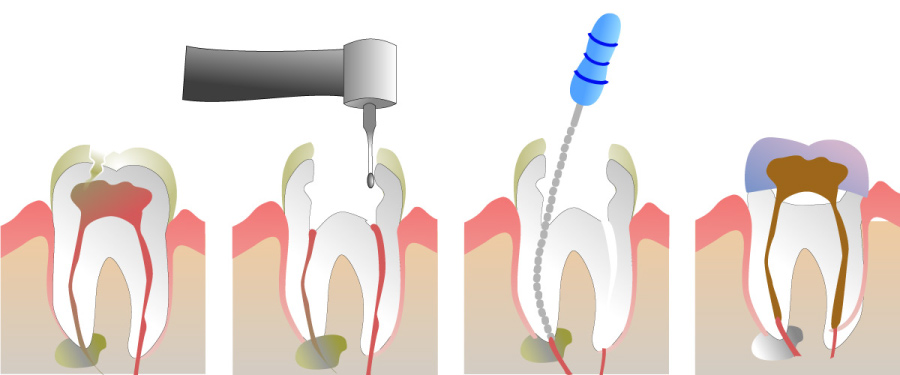
A root canal removes the infected pulp, cleans and shapes the canal system inside the tooth, and seals it to prevent reinfection. The tooth is then restored, typically with a crown, and continues to function normally for many years. The alternative is extraction — and a missing tooth creates its own set of long-term consequences.
A tooth that needs a root canal is not a tooth that needs to be removed. Saving a natural tooth is almost always the better long-term outcome for your bite, your bone, and your adjacent teeth.
Ready to book? Book An Appointment at Kranti Dental Clinic today.
The Step-by-Step Process — What Actually Happens
Step 1: Diagnosis and X-Ray
Before any treatment begins, Dr. Sunita Doibale evaluates the tooth clinically and takes a dental X-ray to assess the extent of infection, the shape of the root canals, and the condition of the surrounding bone. This information determines the complexity of the case and the number of appointments required.
Step 2: Local Anaesthesia
This is the step most patients dread most, and it is also the step that has improved the most. Modern local anaesthesia used at Kranti Dental Clinic ensures the tooth and surrounding area are completely numb before any instrumentation begins. Most patients feel pressure during the procedure but not pain. If any sensation is felt, the dentist adds more anaesthetic immediately. You are in control of this.
Step 3: Isolation With a Rubber Dam
A small rubber sheet is placed around the tooth to isolate it from the rest of the mouth. This keeps the area sterile, prevents contamination from saliva, and actually makes the procedure more comfortable by keeping instruments away from the tongue and cheeks.
Step 4: Access Opening
A small opening is made in the top of the tooth to access the pulp chamber. Because the area is numb, this step is essentially painless. The infected pulp tissue is then removed using small, precise instruments.
Step 5: Canal Cleaning and Shaping
This is the core of the procedure. The canal system inside the root is cleaned, shaped, and disinfected using a combination of rotary nickel-titanium instruments and irrigating solutions. Modern rotary systems complete this step far faster and more thoroughly than the older manual technique, which is one of the main reasons contemporary root canal treatment is so much more comfortable than its historical reputation suggests.
Step 6: Filling the Canal
Once the canals are thoroughly cleaned and shaped, they are filled with a biocompatible rubber-like material called gutta-percha, which seals the space and prevents bacteria from re-entering. The access opening in the tooth is then closed with a temporary or permanent filling.
Step 7: Crown Placement
A tooth that has had a root canal is more brittle than a vital tooth because it no longer has a blood supply. It needs to be protected with a dental crown to prevent fracture, particularly for back teeth that bear the brunt of chewing forces. The crown is placed at a separate appointment after the root canal is confirmed to be successful.
How Long Does a Root Canal Take?
Most straightforward root canals on front teeth or premolars are completed in a single appointment of 60 to 90 minutes. Molar teeth, which have three or four canals and more complex anatomy, may require two appointments. In cases with severe infection, a medicated dressing is placed between appointments to allow the infection to settle before the final filling.
What to Expect After the Procedure
It is completely normal to experience mild soreness or sensitivity in the treated tooth and the surrounding gum for two to three days after a root canal. This is not the procedure failing — it is normal post-treatment inflammation as the tissues heal. Over-the-counter pain relief manages this comfortably in the vast majority of cases.
Severe pain, swelling, or a return of symptoms after initial improvement should be reported to the clinic promptly. These are uncommon but can indicate that additional treatment is needed. At Kranti Dental Clinic, post-treatment support is part of the care — you are not left to manage complications alone.
How Long Does a Root Canal-Treated Tooth Last?
A root canal-treated tooth that is properly restored with a crown and maintained with good oral hygiene can last a lifetime. Studies consistently show success rates above 90 percent over ten years for properly performed root canal treatment. The most common reason for failure is not the root canal itself but inadequate crown restoration or poor oral hygiene in the years following treatment.
Frequently Asked Questions
Q: Is a root canal more painful than a tooth extraction?
Most patients report that a root canal is no more uncomfortable than a routine filling. An extraction, by contrast, involves more post-procedure discomfort and the longer-term consequence of a missing tooth. For a tooth that can be saved, a root canal is almost always the better choice on both counts.
Q: Can I eat normally after a root canal?
Avoid chewing on the treated tooth until the permanent crown is placed, as an unrestored root canal-treated tooth is vulnerable to fracture. Once the crown is in place, you can eat normally with no restrictions.
Q: What happens if I do not get a root canal when I need one?
The infection will spread. An untreated dental abscess can extend into the jaw bone, the neck, and in severe cases the airway — a genuine medical emergency. At a minimum, the tooth will eventually require extraction, which is more complex and costly than a timely root canal would have been.
Q: Are there alternatives to a root canal?
The only alternative to a root canal for an infected tooth is extraction. While extraction removes the pain and infection, it creates a gap that should ideally be replaced with an implant or bridge to prevent neighbouring teeth from shifting. In most cases, saving the natural tooth with a root canal is the more cost-effective and functionally superior long-term choice.
Stop Delaying Because of Fear. Modern Root Canal Treatment Is Not What You Think.
Dr. Sunita Doibale at Kranti Dental Clinic uses the latest rotary techniques to make root canal treatment as comfortable as a routine filling.
Book your appointment at krantidental.com or find us on Google.
Ready to book? Book An Appointmentat Kranti Dental Clinic today.
Clinic: Kranti Dental on Google | Specialist: Dr. Sunita Doibale | About: About Kranti Dental Clinic